Eyewear and Eye Test in Bhubaneswar — Why the Two Always Go Together
Ask most people when they last had a proper eye vision test, and you’ll get a familiar shrug — “a while ago,” “before college maybe,” or the classic “I think my vision’s fine.” The uncomfortable truth is that most of us have no real way of knowing whether our vision has quietly changed over the past year or two, because our brains are remarkably good at adapting to gradual decline. You don’t wake up one day with suddenly blurry vision — it creeps in slowly enough that you adjust without noticing, until something forces the comparison: a friend reads a distant sign before you do, or you finally try on someone else’s glasses and the world snaps into unexpected clarity.
This is exactly why an eye vision test in Bhubaneswar shouldn’t be something you only think about when a problem becomes impossible to ignore. It should be a routine part of your health maintenance, the same way you’d get a dental checkup or a general health screening — proactive, not reactive. This guide breaks down what a comprehensive vision test actually involves, why it matters at every stage of life, and what the results can tell you beyond just “do I need glasses.”
There’s a common assumption that eye vision tests exist purely to determine whether you need spectacles. While that’s certainly one outcome, a comprehensive vision test does far more — it’s often the first place where broader health issues get caught, sometimes before any other symptoms appear.
The eyes are unique in that they’re the only place in the body where blood vessels can be directly observed without any invasive procedure. This means an eye examination can reveal early signs of conditions like diabetes, hypertension, and even certain neurological issues, often before a person experiences any other noticeable symptoms. A thorough eye vision test in Bhubaneswar isn’t just about reading letters off a chart — it’s a genuine health screening with implications well beyond your prescription.
A proper vision test goes through several distinct stages, each serving a specific diagnostic purpose:
This is the most familiar part — reading letters of decreasing size from a standardized chart at a fixed distance. It measures how sharply you see at various distances and forms the baseline for identifying myopia (nearsightedness), hyperopia (farsightedness), or normal vision.
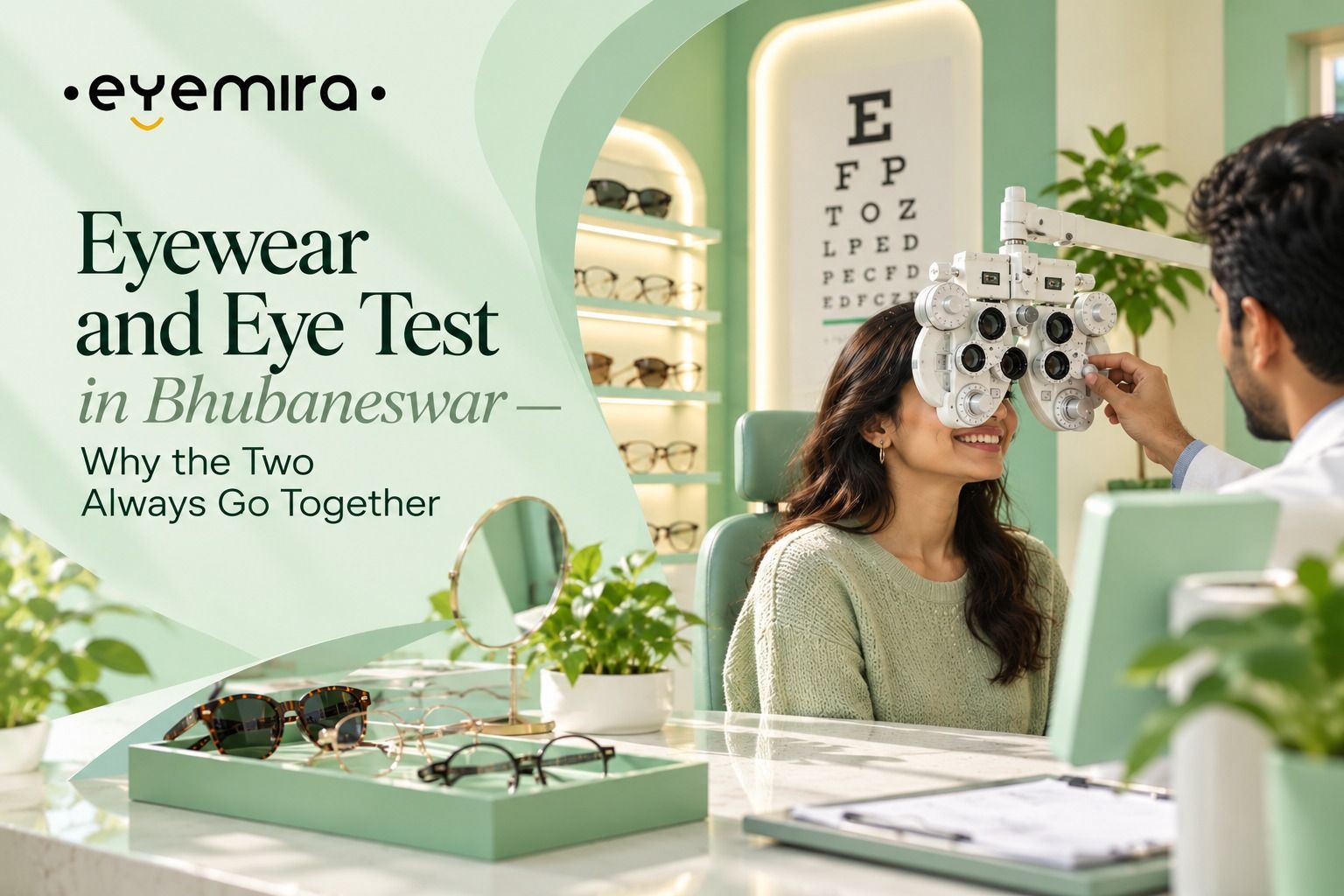
Using a phoropter or digital refraction device, the optometrist fine-tunes the exact lens power needed to bring your vision to its sharpest possible clarity. This is where your actual prescription — the specific numbers that go on your glasses or contact lens order — gets determined.
Many people have some degree of astigmatism, an irregularity in the curvature of the cornea or lens that causes blurred or distorted vision at all distances. This is tested separately from basic nearsightedness or farsightedness and requires specific cylindrical lens correction if present.
This checks how well your two eyes work together as a team — important for depth perception, reading comfort, and avoiding issues like eye strain or double vision, particularly relevant for children whose visual systems are still developing.
Particularly relevant for students choosing certain career paths (aviation, certain engineering fields, design) and for early identification of color vision deficiencies, which are often only discovered when they start affecting practical tasks.
A quick, painless test that screens for glaucoma — a condition where elevated pressure inside the eye can gradually damage the optic nerve, often with no early symptoms at all. This is precisely why routine screening matters, since glaucoma is frequently only caught through testing, not through how it feels.
Using specialized lights and, in some cases, dilating drops, the optometrist examines the retina, optic nerve, and blood vessels at the back of your eye. This is where signs of diabetic retinopathy, macular changes, or other retinal conditions are typically first detected.
This checks your side vision — how much you can see without moving your eyes directly toward an object. Reduced peripheral vision can be an early sign of certain neurological or optic nerve conditions and is particularly important for drivers.
Children rarely report vision problems accurately, simply because they have no reference point for what “normal” vision should look like — if they’ve always seen the world slightly blurry, they assume that’s just how it is. Undiagnosed vision problems in children can significantly affect academic performance, reading development, and even social confidence. Annual vision testing during school years is one of the simplest ways to catch issues before they impact learning.
This is the group most likely to skip vision testing altogether, often because vision feels “fine enough.” But this is also the group most exposed to prolonged screen time — laptops, phones, tablets — which contributes to digital eye strain, dry eyes, and, increasingly, progression of existing myopia. Regular testing every 1-2 years catches these issues before they become chronic discomfort.
This is when presbyopia typically begins, alongside an increased risk of more serious conditions like glaucoma, cataracts, and age-related macular degeneration. Annual vision testing becomes significantly more important from this age onward, not just for updating prescriptions but for catching these conditions early, when treatment options are most effective.
These conditions can silently damage the blood vessels in the retina over time. Regular eye examinations — often more frequent than the general population, as advised by a doctor — are a critical part of managing these conditions and catching diabetic retinopathy before it causes irreversible vision loss.
While routine testing is important, certain symptoms warrant an immediate eye vision test in Bhubaneswar rather than waiting for your next scheduled checkup:
Any of these symptoms are worth acting on promptly rather than waiting for a routine annual checkup.
As a general guideline:
Not every “eye test” offers the same depth or accuracy. Here’s what to look for to ensure you’re getting a genuinely comprehensive eye vision test in Bhubaneswar:
Time taken. A thorough test typically takes 20-30 minutes. If you’re in and out in five minutes, important steps are likely being skipped.
Qualified personnel. Confirm that a certified optometrist — not just sales staff — is conducting your examination.
Proper equipment. Look for stores using phoropters, digital auto-refractors, and tonometers (for eye pressure), not just a basic wall chart.
Clear communication of results. You should leave understanding your exact prescription, any changes since your last test, and any health flags the optometrist noticed — not just a slip of numbers with no explanation.
No pressure to purchase immediately. A reliable eye care provider gives you your results and lets you make purchasing decisions on your own timeline.
At Eyemira, every vision test is treated as a genuine health assessment, not a quick formality before a sales pitch. Using proper diagnostic equipment and conducted by trained optometrists, the process covers everything from basic visual acuity to eye pressure and internal eye health checks — giving you a complete, honest picture of your vision, not just a number for your next pair of glasses.
Whether you’re bringing your child in for their first proper eye test, managing a chronic condition that requires regular monitoring, or simply overdue for a checkup you’ve been putting off for a couple of years, Eyemira’s approach stays consistent: thorough testing, clear explanations, and zero pressure.
A little preparation helps your optometrist give you the most accurate assessment possible:
Bring your current glasses or contact lenses, along with any previous prescription slips you may have, so your optometrist can track changes over time rather than starting from scratch.
Make a note of your symptoms, however minor they seem — occasional headaches, difficulty with night driving, eyes feeling tired by evening. These small details often help the optometrist ask the right follow-up questions and interpret your results more accurately.
Mention your family history, particularly of conditions like glaucoma, macular degeneration, or diabetes, since certain eye conditions have a hereditary component that’s useful context during your examination.
List any medications you’re currently taking, as some can affect tear production, pupil response, or overall eye comfort, and this information helps your optometrist interpret your results more accurately.
If you wear contact lenses, remove them a few hours before your test, since they can temporarily alter the shape of your cornea and affect certain measurements.
Avoid scheduling your test immediately after a long stretch of intense screen use, if possible, since eyes tend to be temporarily fatigued after prolonged near-focus work, which can subtly influence certain test results.
Once your examination is complete, you should receive a clear breakdown of your results — not just a prescription slip, but an actual explanation of what the numbers mean and whether anything has changed since your last test. If you need corrective lenses, your optometrist should walk you through your options, including lens materials and coatings suited to your lifestyle. If any health concerns were flagged during the examination, such as early signs of elevated eye pressure or retinal changes, these should be explained clearly, along with recommended next steps or follow-up timelines.
You’re also entitled to a copy of your prescription regardless of where you choose to purchase your eyewear, so don’t hesitate to ask for this if it isn’t automatically provided.
Is an eye vision test painful? No. The vast majority of tests involved are completely painless, involving light exposure, reading charts, and brief puffs of air or gentle contact-free pressure checks for glaucoma screening. There’s no needle or invasive procedure involved in a standard vision test.
Do I need to fast or avoid food before my test? No fasting is required for a standard vision test, unlike some other medical examinations. You can eat and drink normally beforehand.
How long does a comprehensive eye vision test take? Typically between 20 and 30 minutes for a thorough examination covering all the key components, though this can vary slightly depending on individual circumstances or if additional screening is needed.
Can children undergo the same tests as adults? Most core components are similar, though pediatric eye tests are often adapted to be more engaging and age-appropriate, using picture-based charts for younger children who can’t yet read letters confidently.
Will my eyes be dilated during the test? Not always. Dilation, which involves using drops to widen the pupil for a more detailed retinal examination, is typically used selectively, based on your age, symptoms, or specific risk factors, rather than as a routine part of every single test.
How soon will I know my results? In most cases, your results, including your prescription and any health observations, are available immediately at the end of your examination.
Your vision changes gradually enough that you often won’t notice it happening — which is exactly why waiting until something feels obviously wrong isn’t a reliable strategy for protecting your eye health. A comprehensive eye vision test in Bhubaneswar takes less than half an hour and can catch not just refractive errors, but early signs of conditions that, if left unmonitored, could lead to far more serious and sometimes irreversible vision loss.
If it’s been over a year since your last real eye examination — or you’ve never had a comprehensive one to begin with — there’s no better time than now.
Book your comprehensive eye vision test at Eyemira, Bhubaneswar, and get the clarity — and peace of mind — your eyes deserve.